Table of Contents
- Live Table Examples
- Ping Pong Table Cost at a Glance
- What Determines Ping Pong Table Price?
- Tier 1: Entry-Level Tables Under $300
- Tier 2: Good Home Tables Around $300–$700
- Tier 3: Serious Indoor Tables Around $700–$1,200
- Tier 4: Outdoor Tables Around $500–$1,500+
- Tier 5: Premium and Competition Tables Above $1,200
- How Much Should You Spend?
- Common Price Mistakes
- Final Thoughts
The price of a ping pong table can range from a few hundred dollars to well over a thousand. The important question is not simply “How cheap can I go?” but what level of bounce, stability, and durability do I need?
This ping pong table price comparison breaks the market into practical budget tiers. I’ll explain what each tier normally includes, which specifications matter, and when spending more actually improves the playing experience. For a model-by-model shortlist, see our best ping pong tables.
Live Table Examples
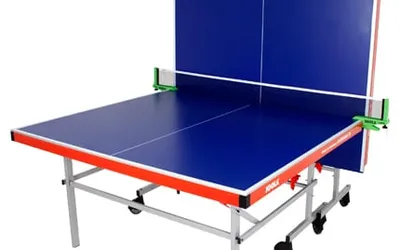
These current listings illustrate the budget bands without turning the guide into a static price list:
| Example | Best for | View |
|---|---|---|
 STIGA Advantage Lite STIGA Advantage Lite | Entry-level indoor play | View on Amazon |
 JOOLA Inside 15mm JOOLA Inside 15mm | Full-size home table | View on Amazon |
 GoSports 6 ft x 3 ft GoSports 6 ft x 3 ft | Compact rooms | View on Amazon |
Ping Pong Table Cost at a Glance
| Budget tier | Typical cost | Top thickness | Best for |
|---|---|---|---|
| Entry level | Under $300 | 12–15mm | Occasional family play |
| Good home table | $300–$700 | 15–19mm | Regular recreational play |
| Serious indoor table | $700–$1,200 | 18–25mm | Club-style practice at home |
| Outdoor table | $500–$1,500+ | Weatherproof composite | Patios, garages, and outdoor storage |
| Premium competition table | $1,200+ | 22–25mm | Dedicated players and clubs |
These are useful buying bands rather than fixed rules. Sales, discontinued models, and delivery costs can move a table between tiers. What matters is whether the construction matches your expectations.
What Determines Ping Pong Table Price?
Top thickness
Thickness is one of the clearest clues to bounce quality. A 12mm or 15mm top can be perfectly enjoyable for casual play, but thinner panels tend to feel less consistent near the edges. An 18mm top is a sensible middle ground for a home player. Serious improvers often prefer 22mm or 25mm.
Thickness is not everything. A poorly supported thick top can still play worse than a well-built thinner one. Look at the frame, underside support, and how well the two halves meet.
Frame and leg construction
A rigid steel apron helps keep the playing surface level. Wide legs, reliable locking bars, and adjustable feet matter more than decorative graphics. If the table flexes when someone leans on it, the extra speed or thickness on the specification sheet will not rescue the experience.
Wheels and folding hardware
Rollaway tables cost more because their hinges, latches, and wheels need to do real work. A table that folds easily and locks positively is worth paying for if you store it after every session. Our foldable ping pong table guide goes deeper into storage and playback mode.
Indoor or outdoor materials
Indoor tables normally use wood-based tops. They deliver a familiar bounce but should live in a dry room. Outdoor tables use aluminum, resin, or other weather-resistant construction. They may have a thinner playing top, but the material is designed to resist moisture and sunlight.
Tier 1: Entry-Level Tables Under $300
The under-$300 category is aimed at occasional play, children, parties, and buyers who are not sure how often they will use a table. Some models are full size; others are compact or made from lighter materials.
What you usually get
- A 12mm to 15mm playing top
- Basic folding legs
- Light-duty wheels or no wheels
- More assembly and less adjustment
- A surface that is fine for casual rallies but less forgiving for serious training
An inexpensive table can be a sensible choice for a spare room. It becomes a poor bargain when you expect tournament-like bounce, move it constantly, or leave it in a damp garage.
What to check before buying
Confirm the unfolded dimensions, folded depth, net quality, and whether the two halves can be leveled. A low price is less attractive if the table arrives with weak latches or requires two people to move every time.
Tier 2: Good Home Tables Around $300–$700
This is the sweet spot for many families and recreational players. In this range you can usually find a stable rollaway, a better frame, and a 15mm to 19mm top.
The extra money often improves the things you notice every session: fewer vibrations, smoother wheels, easier setup, and a more predictable bounce. If you play once or twice a week, this tier is generally where value and enjoyment meet.
Look for a table with separate locking halves, levelers on the feet, and playback capability if you train alone. Do not assume that every “professional” label means a competition-level top.
Tier 3: Serious Indoor Tables Around $700–$1,200
Tables in this range are for players who practice regularly and want a more substantial home setup. An 18mm to 25mm top, rigid undercarriage, better wheels, and safer folding hardware are common.
The main advantage is not that the ball suddenly becomes faster. It is that the table behaves more consistently. A reliable bounce makes it easier to judge your technique instead of compensating for an uneven surface.
This is the range where brands such as STIGA and JOOLA offer several credible home and club-style options. Compare individual models in our STIGA table guide and JOOLA table guide.
Tier 4: Outdoor Tables Around $500–$1,500+
Outdoor tables cost more because they need to survive conditions that would quickly damage an indoor wood top. The price should include weather-resistant construction, rust-conscious hardware, and a cover or a realistic storage plan.
An outdoor table is the right choice for a patio or shed where the table will regularly face humidity and temperature changes. It is not automatically better for an indoor room. If the table will stay inside, spend the budget on a stronger indoor top instead.
Read our best outdoor table tennis tables guide for weatherproof models and storage advice.
Tier 5: Premium and Competition Tables Above $1,200
Premium tables make sense for clubs, dedicated training rooms, and players who already know exactly what they want. They may offer 22mm or 25mm tops, exceptionally rigid frames, precise leveling, and durable institutional hardware.
They are not a shortcut to becoming a better player. If your room is too small, your floor is uneven, or you rarely play, a premium table can be wasted money. A mid-range table with enough clearance is usually more enjoyable than a top-end table squeezed against a wall.
How Much Should You Spend?
Use the following decision:
- Playing occasionally? Start under $300, but avoid the flimsiest no-name option.
- Playing weekly at home? Aim for $300–$700 and prioritize a stable rollaway.
- Training several times a week? Look at 18mm or thicker indoor tables.
- Keeping it outdoors? Buy an outdoor model and budget for a cover and storage.
- Building a dedicated room? Premium construction may be worthwhile.
The best value is the table that fits your room, storage routine, and playing frequency. A more expensive table that never gets unfolded is not better value.
Common Price Mistakes
Paying for accessories instead of construction
Cup holders, LED strips, and novelty graphics can be fun, but they should not outrank a rigid frame and a level surface.
Assuming thicker always means better
Top thickness matters, but so do support beams, hinges, and the joint between the halves. Read the full specification instead of buying from one number.
Forgetting delivery and storage
Large tables may have significant delivery fees. Measure doors, stairs, and the storage space before ordering. A full-size table is 9 feet by 5 feet by 2.5 feet when open, before you add room to play.
Using an indoor table outside
This is one of the fastest ways to ruin a wood-based top. If outside storage is unavoidable, choose a weatherproof table.
Final Thoughts
For most homes, a $300–$700 indoor table is the sensible starting point. Spend more when you need a thicker top, frequent practice, or club-level hardware. Choose outdoor construction only when the table will genuinely live outside.
If you are still comparing models, begin with the best ping pong tables, then use the table buying guide to check thickness, clearance, and storage.
Frequently Asked Questions
How much does a good ping pong table cost?
A useful home ping pong table usually costs about $300 to $900. Budget tables can work for casual play, while thicker tournament-style indoor tables and weatherproof outdoor models cost more.
Is a cheap ping pong table worth buying?
It can be worth buying for occasional family play, provided the table folds securely and has a reasonably level surface. The cheapest tables often sacrifice bounce consistency, frame stiffness, and wheel quality.
Is a 15mm ping pong table good enough?
A 15mm top is good enough for recreational home play. Players who train regularly usually notice a more even bounce from an 18mm to 25mm top.
Are outdoor ping pong tables more expensive?
Often, yes. Outdoor tables need weather-resistant tops, frames, and hardware. The extra cost buys durability outside, but an indoor table should not be left on a patio.

Warren Davies
Editorial Team
Hi, I’m Warren Davies, a table tennis addict who loves sharing tips, reviews, and everything you need to level up your game. I’ve spent years playing, testing gear, and geeking out over the sport, and I’m here to make things simple and fun for players of all levels. When I’m not writing, you’ll probably find me perfecting my forehand or trying out the latest paddle.